
Morecambe Offshore Windfarm STEM engagement
18 February 2026
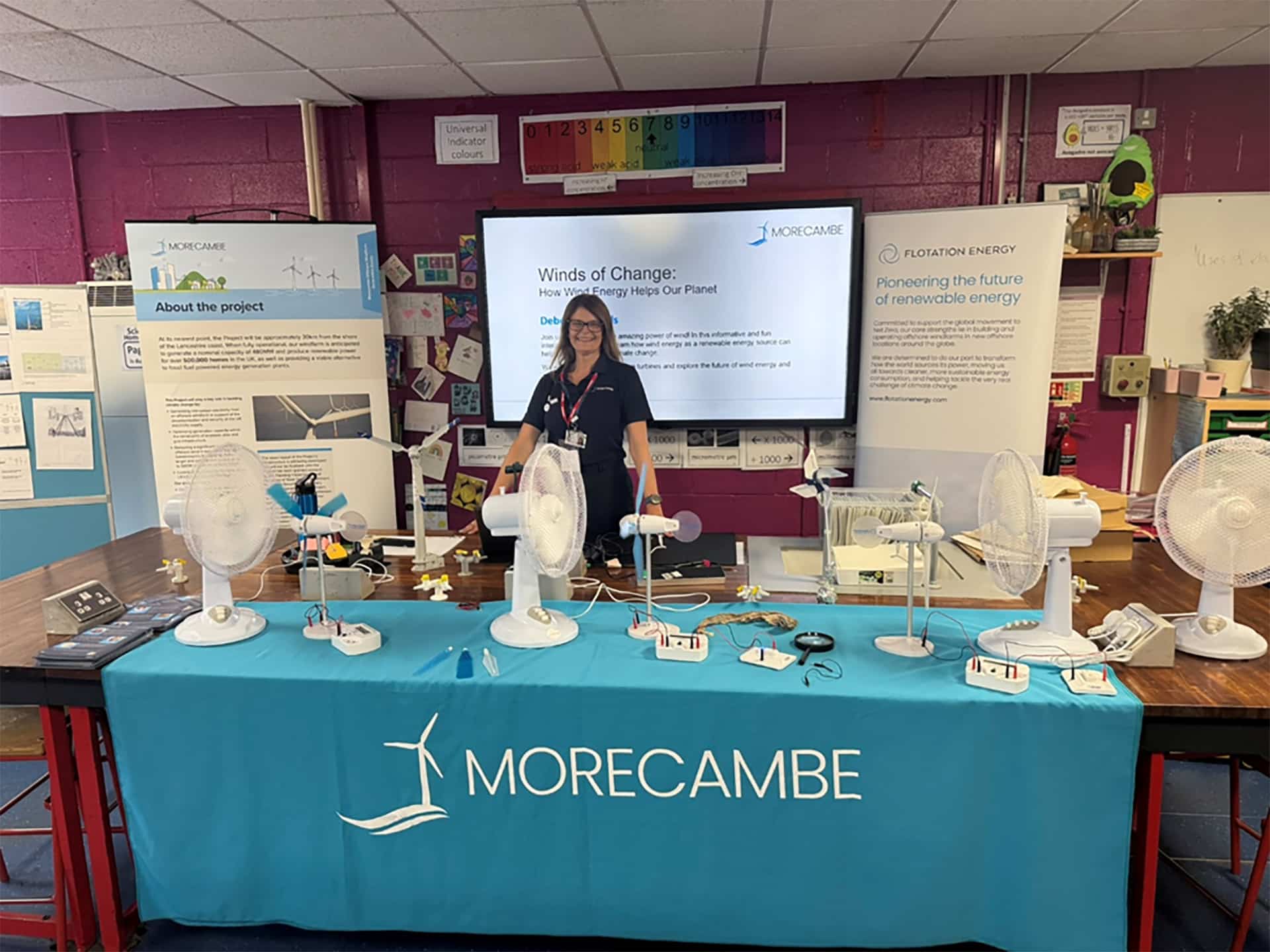
By Deborah Woods, Community Liaison Officer
As we are already halfway through the 2025/6 academic year, I am taking a moment to reflect on the engagement the project team has delivered with the local community over the last year.
The Morecambe project’s programme of STEM engagement (Science, Technology, Engineering, Maths) across school years and early careers is designed to educate and build awareness of the career opportunities available in the renewable energy sector.
The International Renewable Energy Agency (IRENA) estimate global wind power could employ more than 6 million people by 2050.
Partnering with local education providers to raise awareness of renewable energy career paths
Our school and higher education engagement programme has seen the project team over the last year work with local junior and secondary schools, through to sixth form colleges, further education centres and Special Educational Needs Provision (SEN).
Our STEM engagement strategy for schools aligns its activities with school curricula, providing interactive workshops, guest speakers and project-based learning to develop children’s curiosity in real-world energy concepts, while inspiring interest in STEM subjects. What’s more, as a Community Liaison Officer on the Morecambe project, I am trained as an accredited STEM Ambassador tailoring my workshops to each school and each individual year group taking part in the sessions.
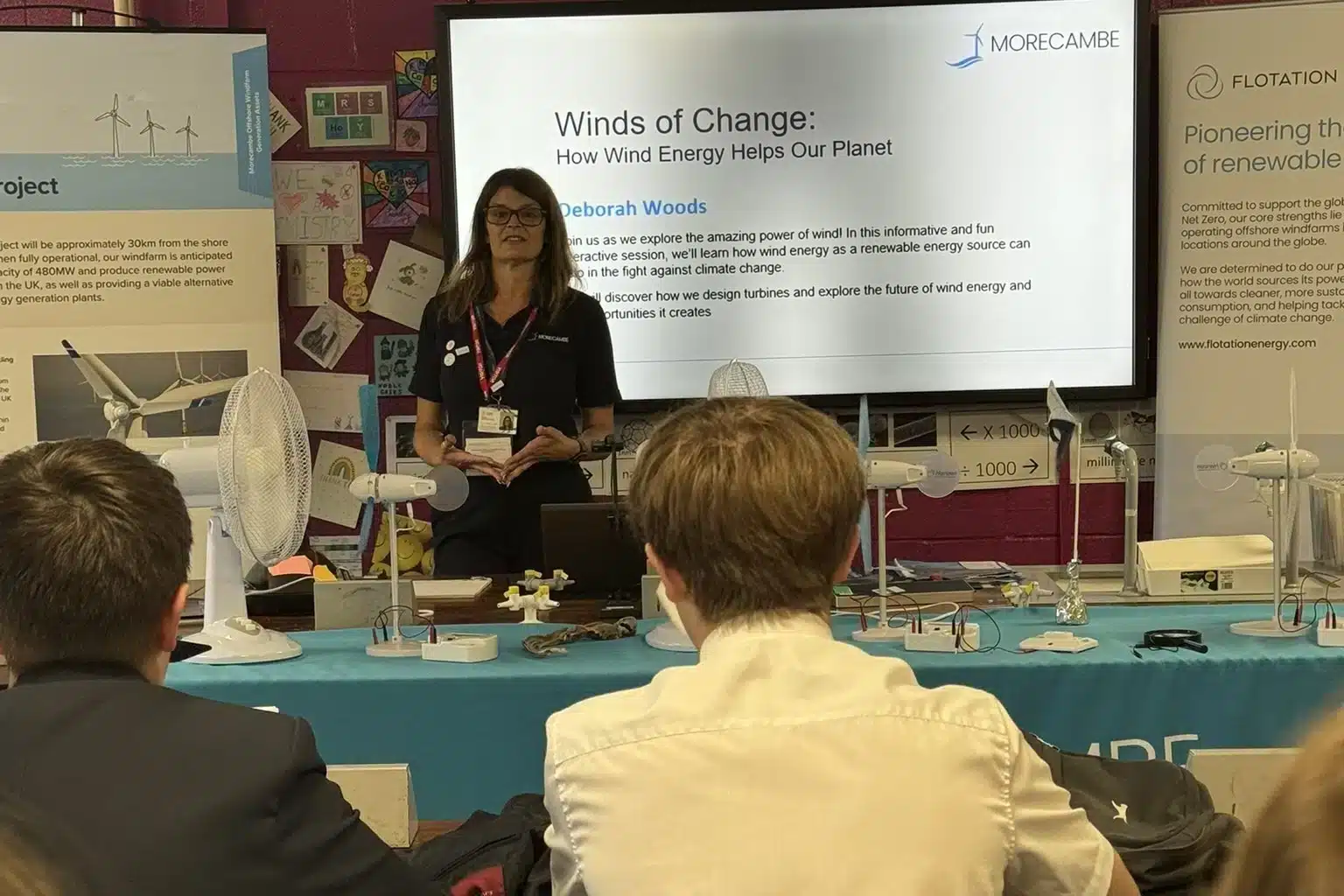
Deborah Woods, Community Liaison Officer at Fylde Coast Academy Trust (FCAT) High School delivering ‘Winds of Change’ STEM session
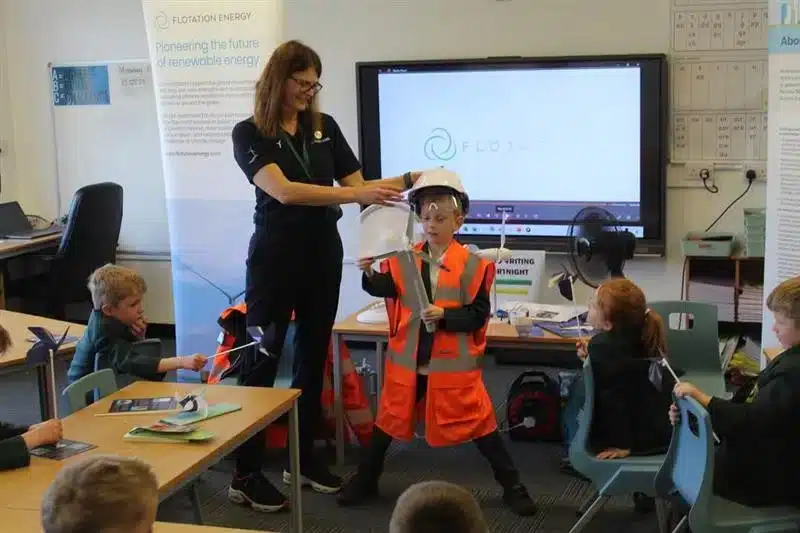
Students trying on PPE during a STEM session at FCAT
It is well known that STEM subjects can provide useful foundation knowledge for a skillset suited to certain roles in the renewable energy sector. Working towards addressing the expected skills gap projected to follow the growth of UK offshore wind is a key consideration as we build awareness of the opportunities that lie ahead in our communities.
Equity in engagement
As part of the planning behind the engagement programme, our team map socioeconomic factors to ensure we are reaching communities associated with the project area who may face additional barriers to access the opportunities and knowledge our school engagement workshops pass on to audiences.
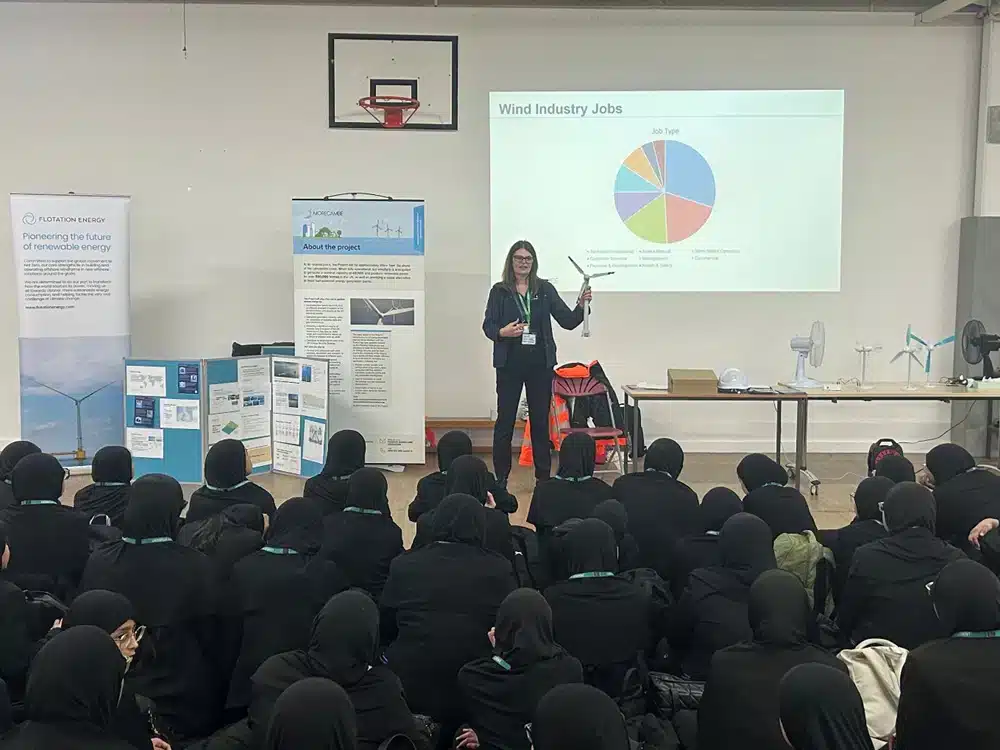
Preston Muslim Girls High School, spring 2025 session
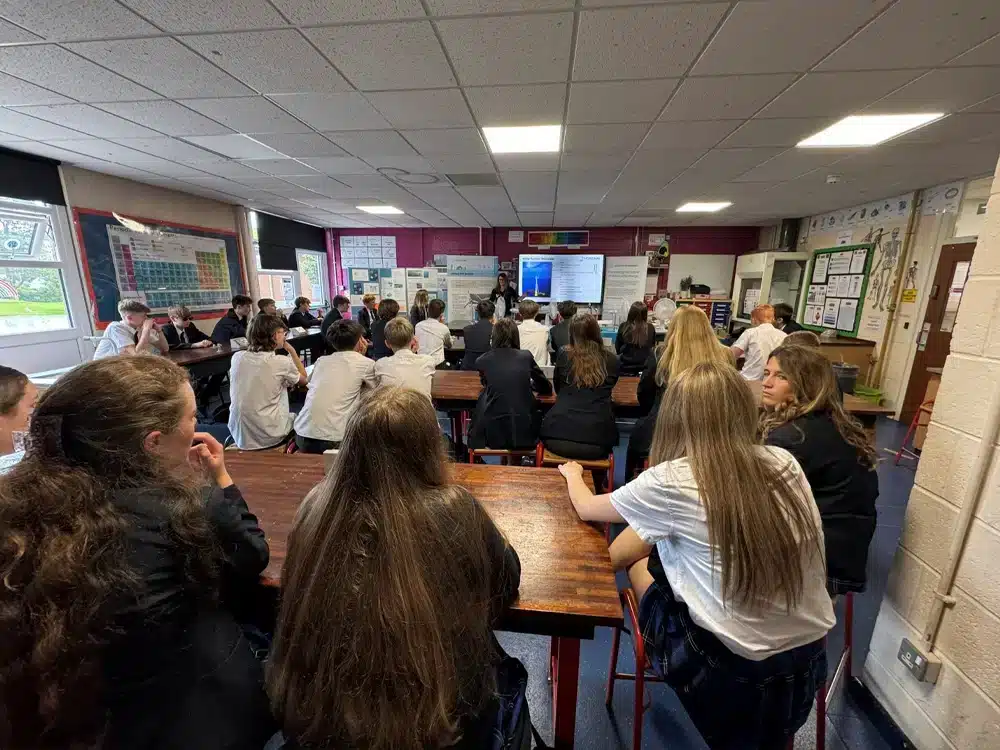
Another tailored year group session at FCAT high School, summer term 2025
Winds of change – Getting hands on
Complementing school curricula, the workshops introduce the concept of climate change, associated legislation and climate goals, before moving into what we mean by renewable energy. Below provides something of an overview to typical session content as we move through looking into wind power generation in detail. The workshops explore ideas such as:
- What are the differences between onshore and offshore wind
- How do we convert wind into energy?
- How are engineers taking inspiration from nature (biomimicry) in turbine design, windfarm planning and operation?
Workshops see students enjoy building their own wind assets – using paper wind turbines for younger children and our model kits for older school pupils to demonstrate how blade shape and pitch interact with wind speed and direction to produce tangible results.
In further education sessions with older pupils, the project team discuss how windfarm design factors maximising yield through design as part of a discussion on Betz’s law (wind energy physics in action).
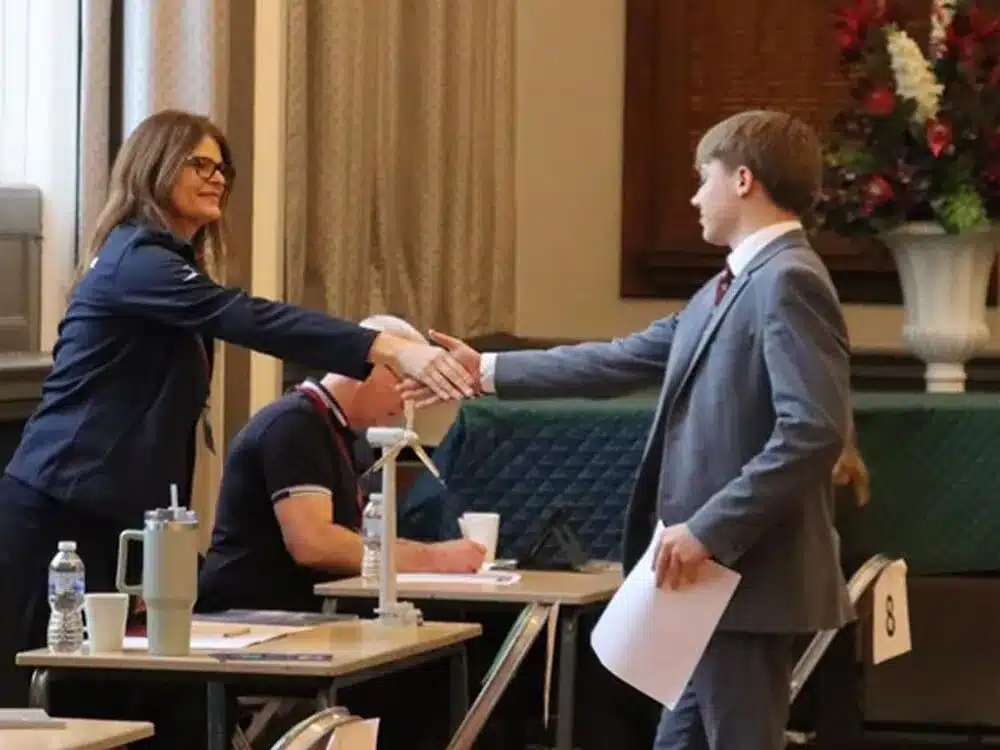
Deborah running careers mock interviews – AKS Lytham school
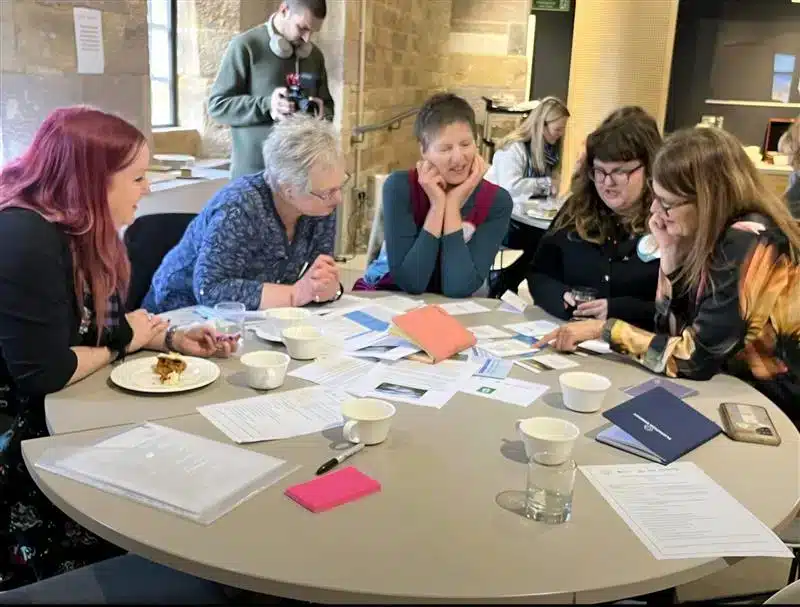
Deborah at a Morecambe Bay curriculum working group meeting, planning content for local schools
The importance of Health and Safety
The workshop typically conclude with an important Health and Safety focus on Personal Protective Equipment (PPE), with class volunteers getting to try on a high-vis jackets and helmets.
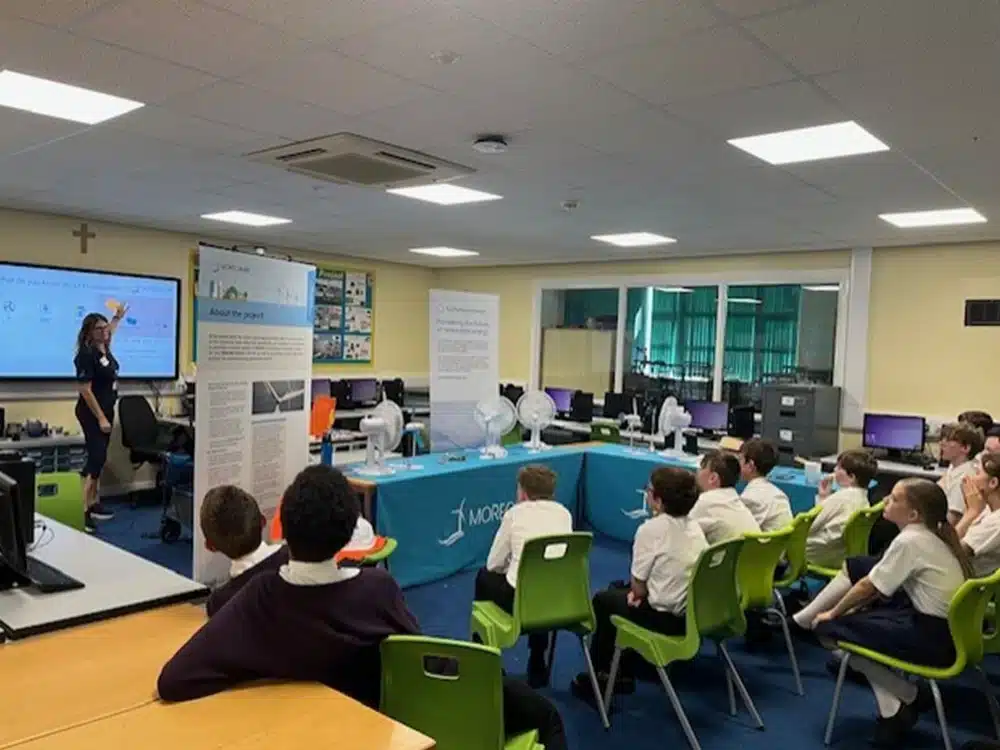
All Hallows Catholic High School, Penwortham – July 2025
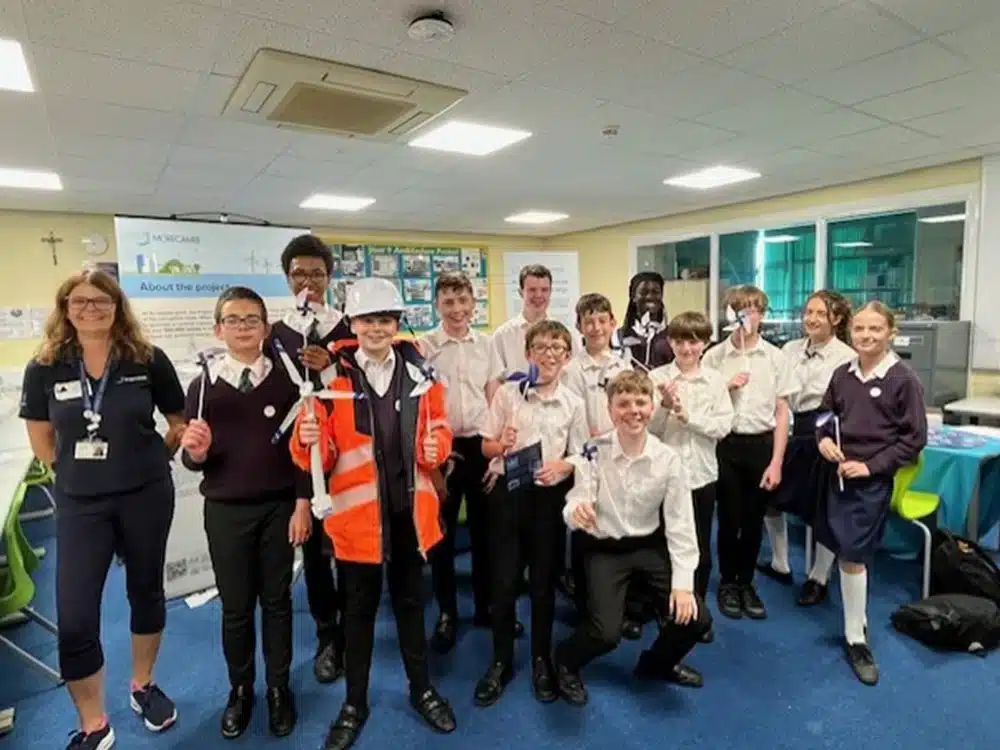
After school STEM club session at All Hallows, Penwortham
In addition to the project team’s work in school settings, I have also participated in a range of career and climate themed events across England’s north west.
- Youth Climate Conference workshops around Morecambe Bay in both Blackpool & Barrow-in Furness
- Plans with Morecambe Bay curriculum lesson plan creation and workshop support for teachers & educators and co-production with local stakeholders – including 2 conferences with group session co-production
- Compass curriculum – Fylde coast – Linking in with school curriculum pedagogy and industry knowledge
- Lancs CAN Stakeholder session on STEM & green careers
- Mock COP session with Liverpool World in Ormskirk
- INWED Girls in Engineering Event in Barrow-In-Furness with Bae System and Vattenfall & Ørsted
- A Cuppa with STEM, participating in a panel discussion around careers in STEM
- Careers Fairs for students and parents
- Climate change ambassador – Flagship accreditation to support education with energy efficiency plans in line with government legislation
Deborah is passionate about her work and looks forward to engaging with the project area community over the months and years ahead. Look out for the next blog instalment where Deborah reviews the engagement work the project team is doing with local environmental groups.

Deborah Woods, Community Liaison Officer at Kincardine Offshore Windfarm